In a simple CASEexpression, Oracle Database searches for the first WHEN ... THEN pair for which expr is equal to comparison_expr and returns return_expr. If none of the WHEN ... THEN pairs meet this condition, and an ELSE clause exists, then Oracle returns else_expr. Otherwise, Oracle returns null.
One way I could think was using a Switch When expression in select query. CASE status . WHEN 'a1' THEN 'Active' WHEN 'a2' THEN 'Active' WHEN 'a3' THEN 'Active' WHEN 'i' THEN 'Inactive' WHEN 't' THEN 'Terminated' END AS StatusText. FROM stage.tst.
In this guide, we break down how to use the SQLCASE WHEN statement with multiple conditions across platforms like MySQL, SQL Server, Oracle, and PostgreSQL. By the end, you’ll know how to write and optimize case when in sql logic—including how to use a casestatement with multiple conditions effectively in real-world queries.
All possible values returned by a CASEexpression must be of the same data type. The searched CASEexpression can be more complicated, involving multiple columns in the comparisons. Each comparison is tested in turn and the associated value returned if a match is found.
Here, we explore the syntax, types, and practical use cases of the PL/SQLCASEstatement to make better decisions and improve your ability to use conditional logic in Oracle PL/SQL.
This Tutorial explains how to use the PL/SQLcasestatement, including simple case & searched case with Syntax, Examples & Code Explanation for better Understanding.
The simple CASEstatement evaluates a single expression and compares it to several potential values. The searched CASEstatement evaluates multiple Boolean expressions and chooses the first one whose value is TRUE.
Conditions can be analysed using the CASEstatement in OracleSQL. In this blog, we will discuss the CASEStatement in SQL and how to use it. What is the CASEStatement in OracleSQL? The CASEstatement is a conditional expression which is generally used by SQL to deal with IF/THEN logic.
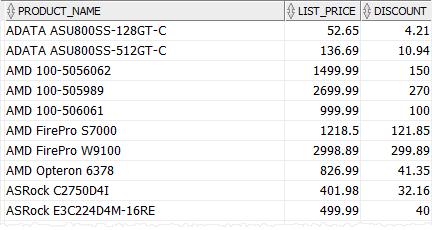 This tutorial shows you how to use Oracle CASE expressions to add if-else logic to SQL statements, making your queries more flexible.